Exactly how to Decide If Assisted Living Is the most effective Fit
Business Name: BeeHive Homes of Taylor Ranch
Address: 6004 Whiteman Dr NW, Albuquerque, NM 87120
Phone: (505) 302-1919
BeeHive Homes of Taylor Ranch
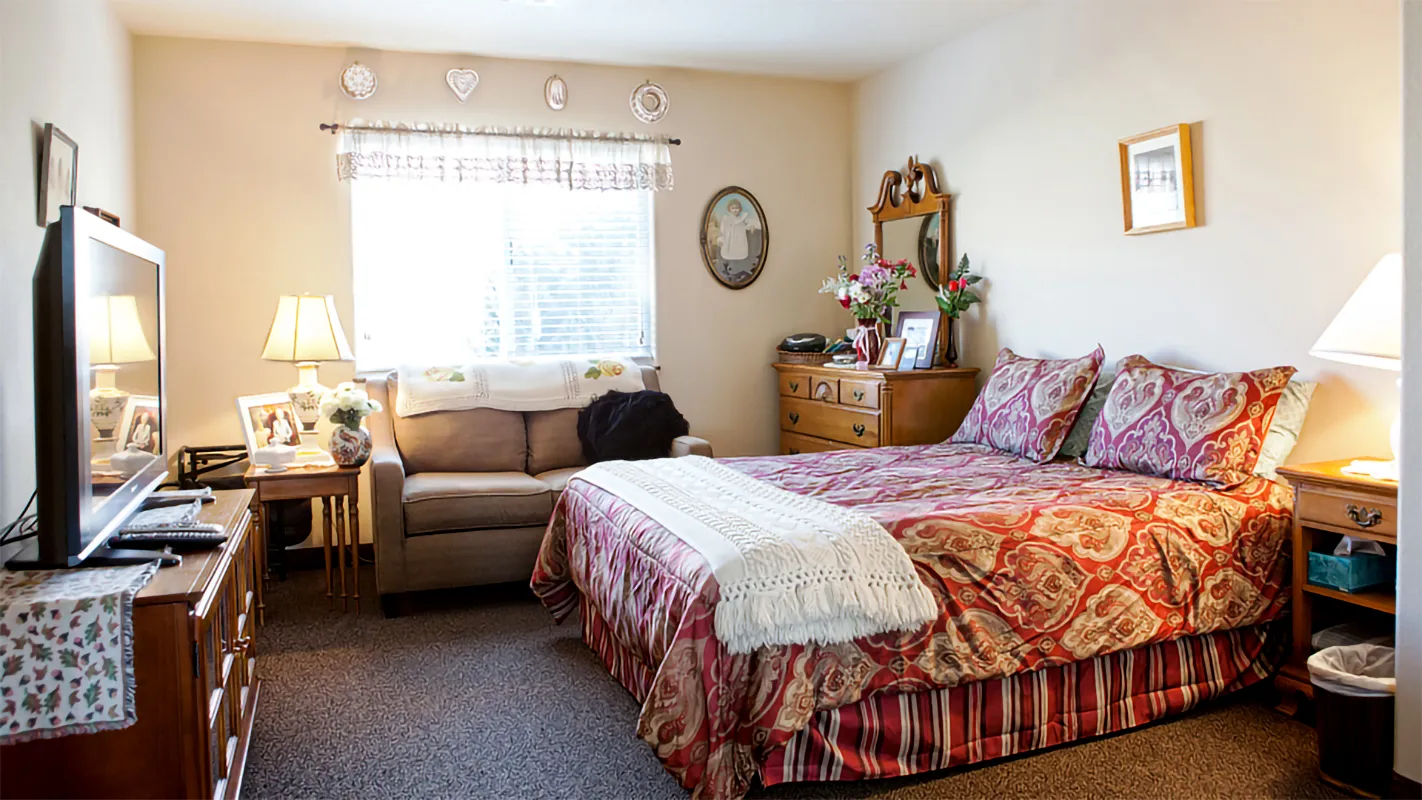
At BeeHive Homes of Taylor Ranch, New Mexico, we offer the finest assisted living experience available in a cozy, comfortable homelike setting. Each of our residents has their own spacious room with an ADA approved bathroom and shower. We prepare and serve delicious home-cooked meals three times a day every day. We maintain a small, friendly elderly care community. We provide regular activities that our residents find fun and contribute to their health and well-being. Our staff is attentive and caring and provides assistance with daily activities to our senior living residents in a loving and respectful manner. We would like to invite you to tour and experience our assisted living home and feel the difference.
6004 Whiteman Dr NW, Albuquerque, NM 87120
Business Hours
Choosing where an older grownup must live is hardly ever a clean, obvious decision. It typically shows up after a slow build-up of little points: a missed dish right here, a forgotten medicine there, an autumn that could have been even worse, a home that used to really feel soothing now appears harder to handle each month. Families often spend a long time attempting to protect the status, which impulse is reasonable. The majority of people intend to stay at home as long as feasible. The question is not whether home issues, yet whether home is still the most safe and most lasting setting for day-to-day life.
Assisted living sits in that middle area between complete self-reliance and full time proficient nursing. For many individuals, it maintains self-respect, personal privacy, and routine while minimizing the burden of cooking, house cleaning, transportation, medicine pointers, and isolation. For others, it is not the right level of assistance in any way. The actual difficulty is finding out how to discriminate without waiting for a crisis to make the decision for you.
What assisted living in fact is, and what it is not
Assisted living is often explained also extensively, which leads to complication. Some family members visualize a medical atmosphere, while others imagine a hotel with aid available if required. The reality is someplace between those extremes. Assisted living areas are created for people that can no more take care of every facet of day-to-day live safely by themselves, however who do not need the consistent clinical guidance of a nursing home.
A typical neighborhood aids with activities such as showering, clothing, grooming, meals, drug reminders, mobility support, and transport to consultations or tasks. The specific solutions differ widely, and that variation issues. One area may be well matched to a person who needs a hand with showering and pointers to take early morning medicine. One more might be better for an individual who needs frequent cueing, close guidance, or more advanced individual care.
It is similarly essential to recognize what assisted living is not. It is not suggested to change skilled nursing care for somebody with complex injuries, unsteady medical conditions, or continuous clinical needs. It is additionally not a wonderful solution for dementia, family members dispute, or chronic isolation. A great fit depends upon the individual's requirements, preferences, and clinical realities, out a pamphlet or a floor plan.
When households look for assisted living near me or senior care near me, they are typically actually asking a deeper concern, which is not simply where can my parent live, but what kind of assistance will actually make life better?
The signs that home is beginning to work against someone
Families typically do not decide on assisted living because of one dramatic event. More often, the proof shows up in layers. A parent that utilized to cook every evening now relies upon snacks and icy food because cooking feels tiring. A spouse notices medication bottles piling up or being taken at the wrong times. A child stops by and recognizes the fridge has lots of ended food. A daughter obtains a phone call after another loss, and the description does not fairly make sense.
There are a couple of patterns I enjoy carefully when assisting families believe this through. The very first is a decrease in personal hygiene or appearance. People do not quit bathing or clothing well even if they are persisting. Occasionally the shower feels harmful. Often joint inflammation makes buttons and zippers agonizing. Occasionally depression or cognitive decrease makes the whole regular feel overwhelming.
The 2nd pattern is drug drift. Missing one tablet might not appear significant, yet duplicated errors can grow out of control. I have seen families make use of pill coordinators, phone alarm systems, and color-coded graphes for months before realizing the actual issue was not forgetfulness alone. It was the mix of lapse of memory, vision modifications, inadequate hunger, and tiredness. Assisted living can assist with drug reminders, however if the individual can not accurately handle despite having motivates, that is a meaningful signal.
The 3rd pattern is social withdrawal. Older adults that are silently ending up being isolated frequently tell family members they are "fine." They might be investing whole days alone, not due to the fact that they delight in privacy, but because driving really feels stressful, stairways are tiring, and reaching out to others has actually ended up being harder than it utilized to be. Assisted living can be a strong alternative right here because it normally constructs in contact with other individuals, meals, activities, and staff.
The fourth pattern is home upkeep falling apart. A home that when felt very easy to handle can come to be a burden. Bills go unpaid, trash gathers, the cooktop is seldom utilized, and a once-tidy space starts sensation harmful or chaotic. When the setting begins to create risk, the discussion changes from preference to practicality.
A practical take a look at the major trade-offs
Assisted living is often the ideal option for people who need support, yet it is not immediately the best choice for every person. The compromises deserve truthful attention.
The strongest disagreement for assisted living is safety with framework. Meals are available. Aid neighbors. Team can see changes in problem earlier than relative sometimes can, particularly if the older adult lives alone. That matters more than people recognize. A delayed shower, an avoided lunch, or a minor stumble can bring about a bigger decline if nobody is there to intervene.
The various other significant advantage is remedy for the undetectable labor of daily life. Lots of older grownups do not just need assist with jobs. They need relief from the constant psychological lots of choosing what to eat, whether to wash currently or later, whether to call the pharmacy, and exactly how to get to the medical professional. A good assisted living establishing reduces that lots without removing autonomy.
The disadvantage is that assisted living is not the like going to home. There are schedules. There are policies. Personal privacy is various. Some locals adapt quickly, while others really feel boxed in at first. That modification period is genuine, and families sometimes underestimate it. An individual who has actually lived alone for years might bristle at established dish times or shared areas. That does not always mean the move was wrong, yet it does mean expectations ought to be realistic.
Cost is an additional unavoidable trade-off. Assisted living is not economical, and rates structures can be confusing. Base prices may look convenient up until care degrees, medication administration, mobility assistance, or memory care services are included. A family comparing senior living alternatives need to ask not just what the monthly fee is today, but what can happen if requirements enhance over the next year or two.
When assisted living makes good sense, and when it may not
The best decision frequently comes down to how needs and independence intersect. Assisted living tends to make good sense when a person is still able to take part in daily life, yet only with a fair quantity of support. They might be cognitively intact or slightly absent-minded, literally unsteady, or simply overwhelmed by the logistics of living alone. They can normally connect preferences, appreciate neighborhood, and relocate via their day with some help.
It might be the very best fit when household caregivers are starting to wear out. That point comes earlier than many people anticipate. Grown-up kids usually attempt to cover everything themselves, and for some time they can. After that the schedule gets impossible. They are making meals, managing drugs, giving transport, taking care of laundry, and managing emergency situations, all in addition to job and family responsibilities. Respite care can in some cases link the void, yet if the need is recurring, assisted living may give the steadier solution.
It may not be the most effective fit if the individual requires extensive treatment, has regular behavior difficulties that call for specialized guidance, or is no more secure despite having reminders and aid. Advanced dementia, for instance, may require a memory care setting as opposed to basic assisted living. Reoccurring drops, oxygen reliance, facility injury care, or quickly altering health and wellness conditions may direct towards a higher level of care.
Families usually really hope the solution will be obvious when it rarely is. What assists is matching the setting to the real degree of support needed, not the level of support an individual wishes they still had. Hope matters, however so does clear-eyed judgment.
Questions that punctured rejection and guesswork
An excellent decision normally begins with straightforward questions, asked without defensiveness. These are the sort of questions that help households relocate from vague worry to practical clarity.
- Can the individual handle bathing, dressing, toileting, and meals safely most days?
- Are medicines being taken correctly without continuous oversight?
- Has there been an autumn, near loss, or repeat emergency room visit in the previous 6 to twelve months?
- Is loneliness, confusion, or seclusion becoming part of daily life?
- Is the family members supplying care that is starting to really feel unsustainable?
These inquiries are not indicated to pity any individual. They are a reality check. If several of them point in the same direction, assisted living is worthy of major consideration, even if nobody wants the conversation.
The role of family members characteristics, and why they complicate everything
A senior care choice is never ever nearly the senior. It influences spouses, adult children, brother or sisters, and sometimes also neighbors or friends who have silently entered into the care network. That is one reason these choices are so mentally challenging. People are not only evaluating health and safety. They are evaluating sense of guilt, commitment, money, background, and overlooked household roles.
One daughter might believe relocating her mother is the loving choice. One more brother or sister might hear the very same idea as abandonment. An older adult may concur in principle and withstand in method, particularly if the relocation feels like a loss of authority. These tensions prevail, and they often increase when families prevent direct discussions for too long.
A sensible approach is to anchor the discussion in visible facts rather than abstract concerns. Instead of claiming, "Mom can not live alone anymore," it is generally a lot more effective to claim, "She left the range on two times last month, missed 3 drug dosages we understand of, and fell getting out of the bathtub." Concrete examples are tougher to argue with and much easier to act on.
If the family is split, it can assist to involve the older adult in the conversation early and to tour areas with each other. People are frequently less resistant when they can see what assisted living in fact appears like. A bright dining room, a tidy apartment, and team who recognize the locals by name can transform the emotional tone of the discussion in such a way that no call can.
Visiting areas with the appropriate eyes open
Many individuals start looking for assisted living near me and rapidly recognize that communities can look similar at first glance. The differences appear in the details. The top quality of the food, the persistence of the staff, the sanitation of usual locations, the way residents are talked to, and the general energy of the building often tell you more than the advertising product does.
When touring, take notice of whether residents appear engaged or just parked before a television. Notice whether team member welcome individuals normally or seem hurried and remote. Ask how the area deals with changes in care needs, after-hours support, and emergencies. If the individual thinking about the move has memory loss, ask exactly how employee handle redirection and safety in a tranquility, respectful way.
It additionally helps to visit greater than once ideally. A lunch hour visit can really feel very various from a quiet mid-morning tour. The best communities usually expose themselves in normal minutes, not simply throughout set up discussions. You would like to know how they work on a Tuesday mid-day, not just how they look when somebody is trying to excite a prospective resident.
A short tour can be enough to get rid of a place that really feels wrong, however a great decision commonly takes time. Households in some cases require to sit with what they saw, contrast notes, and revisit the question after the emotional rush of the tour fades.
When a short-term stay can answer the bigger question
Not every choice needs to be long-term on day one. Sometimes a short-lived keep offers every person the point of view they require. Respite care can be useful when a caretaker needs a break, when a family intends to test whether the older adult adapts well to a neighborhood, or when recuperation after surgical procedure or health problem has actually made independent living briefly unrealistic.
Short-term remains can reveal points that are hard to anticipate from the exterior. Some people relax virtually promptly since they appreciate not needing to take care of meals or house cleaning. Others become extra nervous initially, after that clear up in after a week or 2 once the routine becomes acquainted. A test period can assist distinguish momentary resistance from a real mismatch.
That stated, a brief keep is not constantly a tidy simulation of irreversible life. People often behave differently when they understand something BeeHive Homes of Taylor Ranch senior living is short-lived. Still, respite care can be a beneficial bridge, especially when family members are attempting to decide whether the structure of assisted living feels supportive or limiting for that certain person.
Signs that the action should take place quicker rather than later
There is a type of hold-up that originates from thoughtful planning, and after that there is a hold-up that comes from anxiety using a thoughtful face. The second kind can be harmful. A family might maintain claiming they need "one more month" or "one more season," even as the risks keep mounting.
A step ought to happen quicker rather than later when the individual has currently had a severe loss, is repeatedly missing out on drugs, is no more eating regular meals, is leaving the oven or doors hazardous, or is coming to be increasingly isolated and puzzled. Fast weight reduction, inadequate hygiene, wandering, and duplicated complication regarding time or location are specifically vital warning signs.
It deserves keeping in mind that waiting on a significant situation can make the shift a lot harder. A prepared relocation offers everyone much more control. The person can choose furnishings, bring meaningful possessions, and enter the area with some self-respect undamaged. A rushed action after a hospital stay or a loss frequently feels much more disorienting and traumatic.
A steadier method to consider the decision
The finest fit is hardly ever the least expensive option, one of the most familiar choice, or the one that preserves every old behavior. It is the setup where the person can stay secure, revered, and as independent as feasible without stretching family caregivers beyond reason.
For some individuals, assisted living is the minute life ends up being easier once more. Meals are foreseeable. Aid is available. The loneliness lifts. The housework stops taking in the day. For others, the move feels like a loss, at least initially, and the household needs to relocate gradually, listen meticulously, and maintain readjusting. Both experiences can be true.
What matters most is not whether assisted living seems like abandonment or success in the abstract. What matters is whether it matches the person's real needs. If it does, the fit can be extremely excellent. If it does not, the mismatch usually turns up promptly in aggravation, safety problems, or an expanding dependence on family members that never actually resolves.
The right concern is not whether someone prepares to "quit" the home they have understood. The far better concern is whether their present home still provides the assistance, safety, and quality of life they are entitled to. When the answer begins to tilt far from yes, assisted living may be the most useful and humane next step.
BeeHive Homes of Taylor Ranch provides assisted living care
BeeHive Homes of Taylor Ranch provides memory care services
BeeHive Homes of Taylor Ranch provides respite care services
BeeHive Homes of Taylor Ranch supports assistance with bathing and grooming
BeeHive Homes of Taylor Ranch offers private bedrooms with private bathrooms
BeeHive Homes of Taylor Ranch provides medication monitoring and documentation
BeeHive Homes of Taylor Ranch serves dietitian-approved meals
BeeHive Homes of Taylor Ranch provides housekeeping services
BeeHive Homes of Taylor Ranch provides laundry services
BeeHive Homes of Taylor Ranch offers community dining and social engagement activities
BeeHive Homes of Taylor Ranch features life enrichment activities
BeeHive Homes of Taylor Ranch supports personal care assistance during meals and daily routines
BeeHive Homes of Taylor Ranch promotes frequent physical and mental exercise opportunities
BeeHive Homes of Taylor Ranch provides a home-like residential environment
BeeHive Homes of Taylor Ranch creates customized care plans as residents’ needs change
BeeHive Homes of Taylor Ranch assesses individual resident care needs
BeeHive Homes of Taylor Ranch accepts private pay and long-term care insurance
BeeHive Homes of Taylor Ranch assists qualified veterans with Aid and Attendance benefits
BeeHive Homes of Taylor Ranch encourages meaningful resident-to-staff relationships
BeeHive Homes of Taylor Ranch delivers compassionate, attentive senior care focused on dignity and comfort
BeeHive Homes of Taylor Ranch has a phone number of (505) 302-1919
BeeHive Homes of Taylor Ranch has an address of 6004 Whiteman Dr NW, Albuquerque, NM 87120
BeeHive Homes of Taylor Ranch has a website https://beehivehomes.com/locations/taylor-ranch/
BeeHive Homes of Taylor Ranch has Google Maps listing https://maps.app.goo.gl/VjePfgdypFLUTXAZ6
BeeHive Homes of Taylor Ranch has Instagram page https://www.instagram.com/beehivealbuquerquewest
BeeHive Homes of Taylor Ranch has an TikTok page https://www.tiktok.com/@beehivehomesalbuq
BeeHive Homes of Taylor Ranch has an YouTube page https://www.youtube.com/@hamiltonshives4468
BeeHive Homes of Taylor Ranch won Top Assisted Living Homes 2025
BeeHive Homes of Taylor Ranch earned Best Customer Service Award 2024
BeeHive Homes of Taylor Ranch placed 1st for Senior Living Communities 2025
People Also Ask about BeeHive Homes of Taylor Ranch
What is BeeHive Homes of Taylor Ranch Living monthly room rate?
Our base rate is $6,900 per month. We do an assessment of each resident's needs prior to move-in, so each resident's rate may be slightly higher. However, there are no "a la carte" charges or hidden fees. We do charge a one-time community move-in fee of $2,000
Does Medicare or Medicaid pay for a stay at Bee Hive Homes?
Medicare pays for hospital and nursing home stays, but does not pay for assisted living as a covered benefit. Some assisted living facilities are Medicaid providers, but we are not. We accept private pay, long-term care insurance, and we can assist qualified Veterans with approval for the Aid and Attendance program
Do we have a nurse on staff?
We do have a nurse on contract who is available as a resource to our staff but our residents' needs do not require a nurse on-site. We always have trained caregivers in the home and awake around the clock
What can you tell me about the food at Bee Hive?
You have to smell it and taste it to believe it! We use dietitian-approved menus with alternates for flexibility, and we can accommodate needs for different textures and therapeutic diets. We have found that most physicians are happy to relax diet restrictions without any negative effect on our residents
Do we allow pets?
We do allow small pets as long as the resident is able to care for them. State regulations also require that we have evidence of current immunizations for any required shots
Where is BeeHive Homes of Taylor Ranch located?
BeeHive Homes of Taylor Ranch is conveniently located at 6004 Whiteman Dr NW, Albuquerque, NM 87120. You can easily find directions on Google Maps or call at (505) 302-1919 Monday thru Sunday: 10:00am to 7:00pm
How can I contact BeeHive Homes of Taylor Ranch?
You can contact BeeHive Homes of Taylor Ranch by phone at: (505) 302-1919, visit their website at https://beehivehomes.com/locations/taylor-ranch/ or connect on social media via Instagram Facebook or TikTok
Conveniently located near BeeHive Homes of Taylor Ranch Flix Brewhouse Albuquerque Coors a great movie theater with full food & drink menu. Catch a movie and enjoy some great food while you wait.